
The Kayan Project
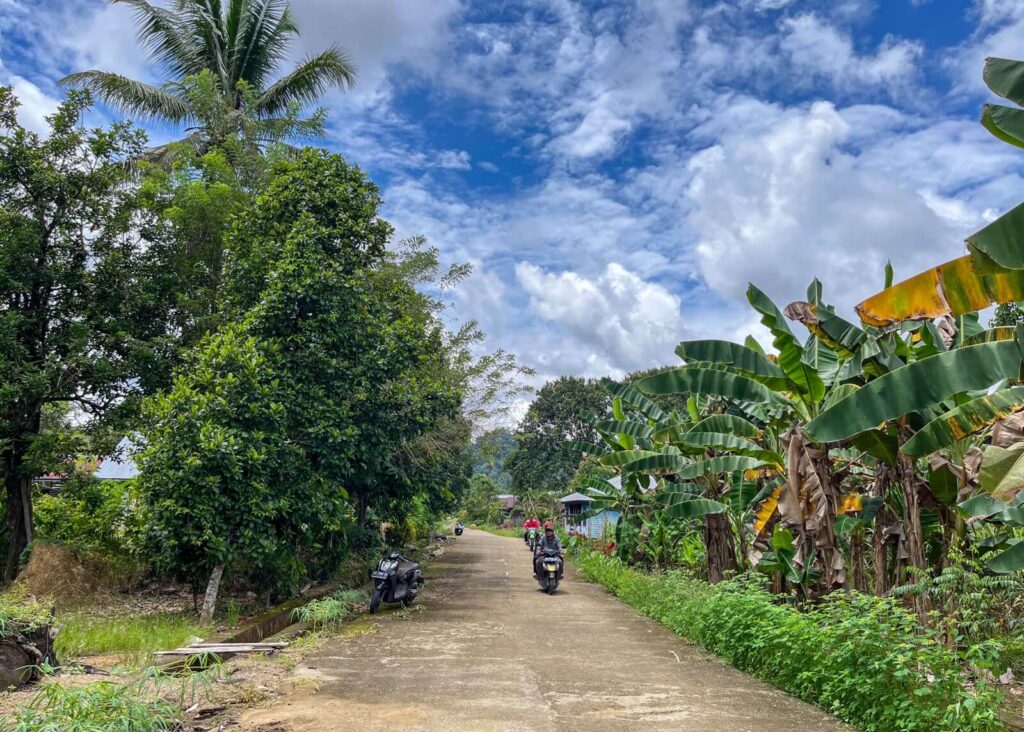
Kayan is a long-term commitment to protecting one of the world’s most vital ecosystems while unlocking new pathways for sustainable prosperity. Covering millions of hectares of rainforest in North and East Kalimantan, Indonesia, the project brings together Indigenous leadership, advanced technology, and innovative finance to safeguard biodiversity, fight climate change, and empower local communities.
Rather than choosing between preservation and progress, Kayan demonstrates how both can thrive together—transforming nature’s value into lasting opportunity for people and planet.
Why The Kayan Project
Why Kayan Matters
A Living Treasure
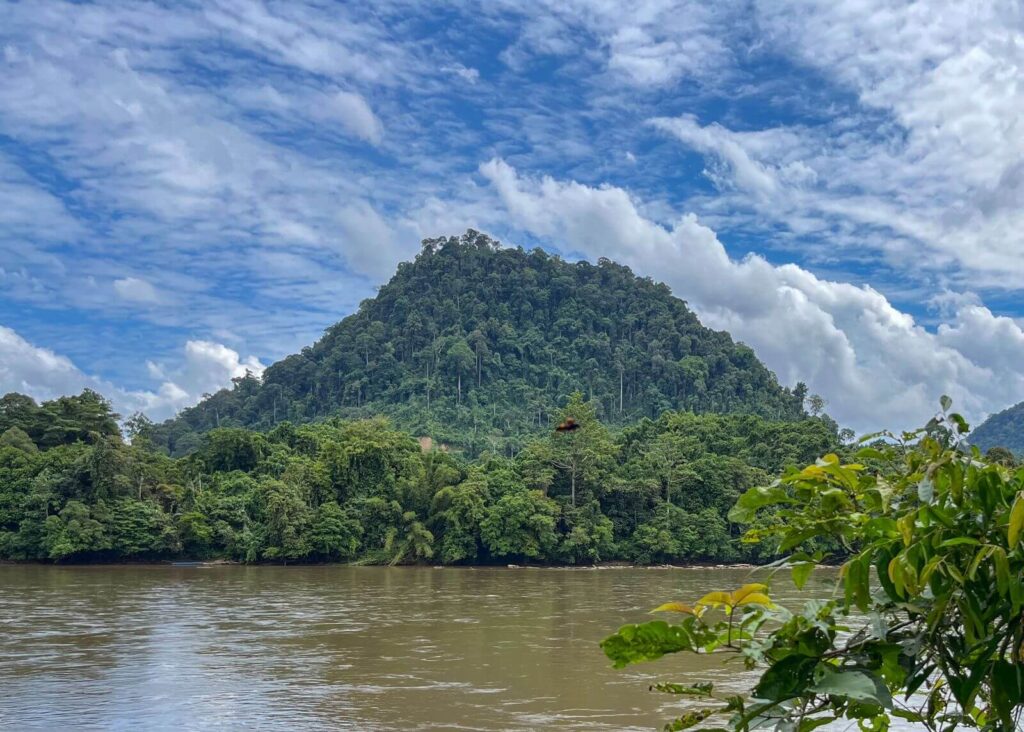
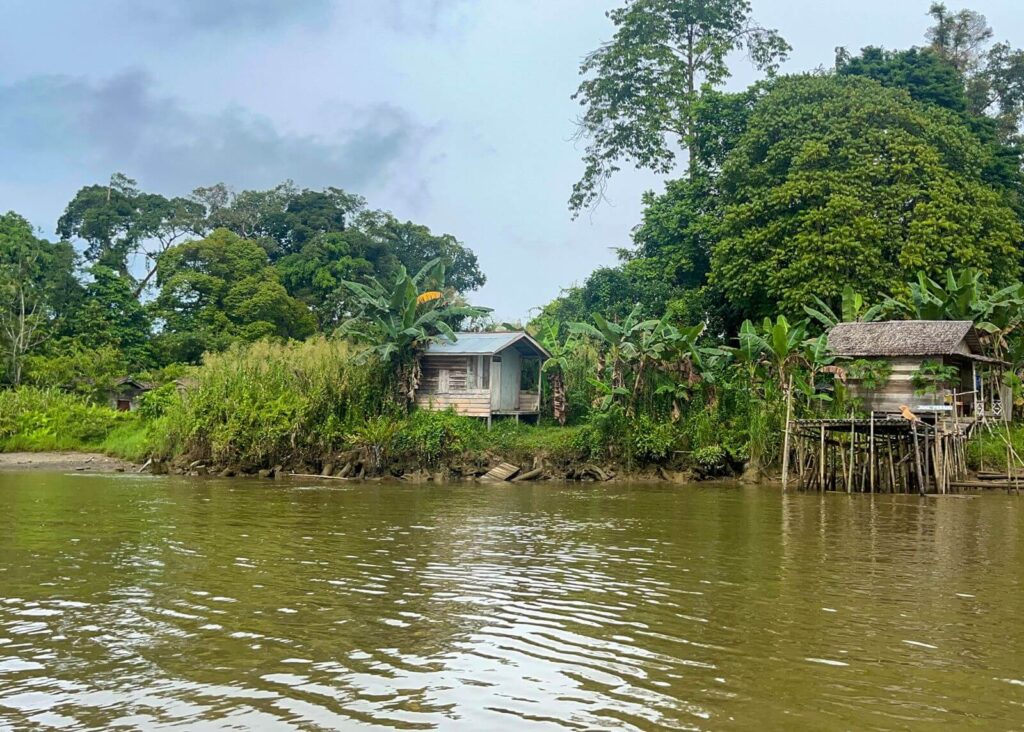
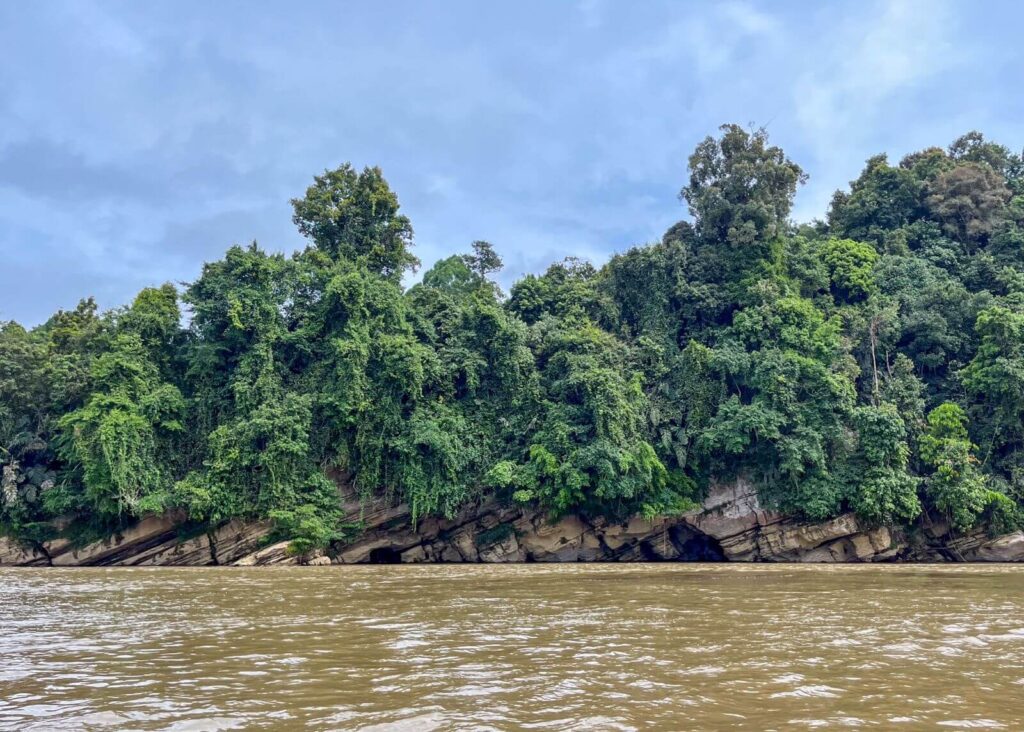
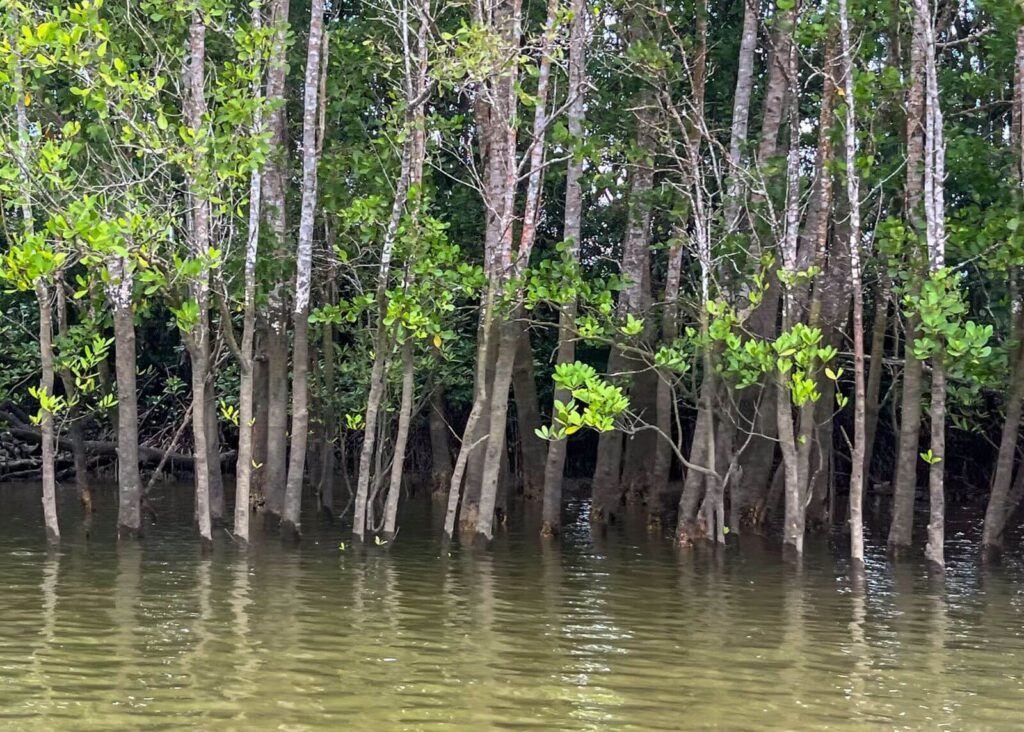
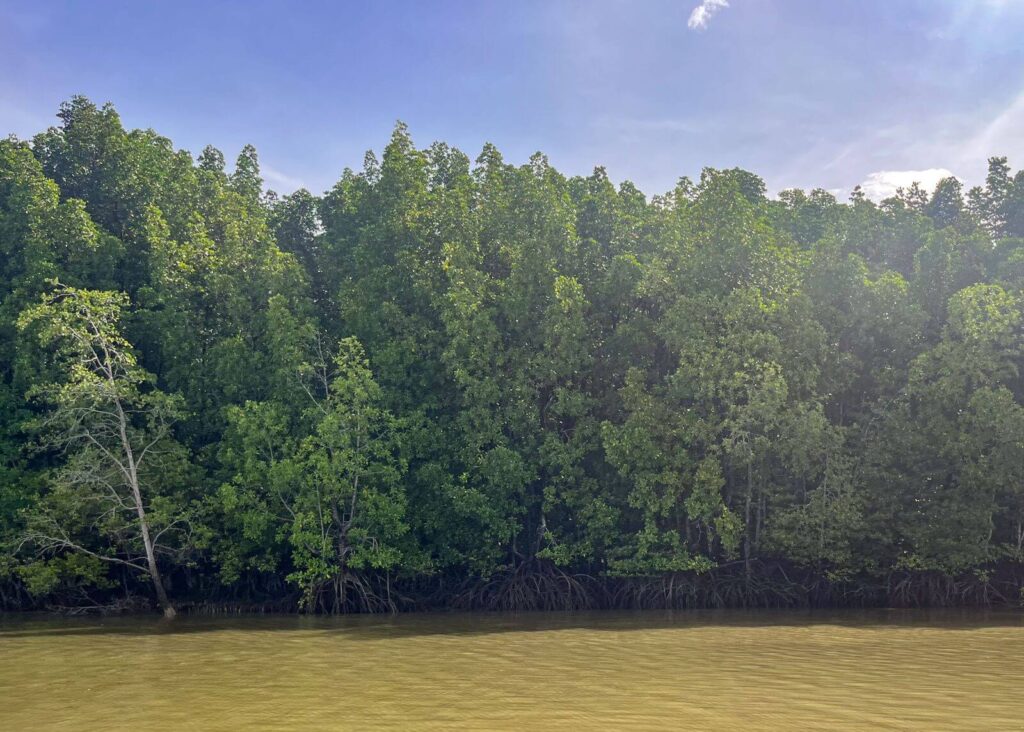
The Kayan River Basin hosts rich ecosystems—mangrove forests, peatlands, and untouched rainforests—that are home to endangered species and vital to local communities.
Community and
Cultural Stewardship
Over 200,000 hectares pledged by the Sultan of Bulungan and 53 villages reflect strong local commitment to conservation and growth.
A 60-Year Promise
Kayan’s long-term plan protects forests, prevents wildfires, supports sustainable forestry, empowers communities, builds green infrastructure, and tracks impact with advanced data.
Introduction And Mission
Introducing The Kayan Token
The Kayan Token represents a groundbreaking approach to balancing environmental conservation with economic growth. Focused on approximately 8.68 million hectares of pristine forest in North and East Kalimantan, it integrates innovative financial mechanisms with sustainable resource management to create long-term value. This initiative is not just about preservation — it’s about creating an economic model where sustainability and profitability coexist.
Our Mission
Our mission is to tokenise land rights, enabling landowners to recoup their investments without relinquishing ownership, thus ensuring transparency and security for token purchasers. Funds raised will be deployed into investments that seek to generate measurable and beneficial environmental and social impacts within Kayan and globally. We strive to provide strong financial returns and dividends to all token holders. Additionally, the issuance and validation of carbon credits from our vast forests, mangroves, and coastlines offer a promising source of annual revenue, supporting long-term sustainability and profitability.
Our Advantages
The Benefit Of
The Kayan Token
Investing in the Kayan Token means participating in a transformative initiative combining sustainability and financial opportunity. The token is backed by tangible assets, Kayan Province’s vast land and coastline, supported by a 60-year Cooperation Agreement, ensuring long-term stability and asset-backed value for all token holders while supporting the preservation and sustainable use of the region’s natural resources.
Kayan supports local communities by integrating sustainability into the following industries and sectors:
Eco-tourism & Sustainable Livelihoods
Kayan supports local communities by integrating sustainable industries:
Eco-Tourism
Kayan Delta, Semolon, Pantai Amal, Sesayap River Protected Forest, and Dayak Longhouse.
Sustainable Products
Forest cash crops (cacao, vanilla, pepper), bird nest gathering, traditional craft production.
Medicinal Resources
Kayan forest honey, Bajakah tree (cancer medication), Tongkat Ali.
Aquaculture
Including mangrove crab and shrimp farming, Sultan Fish production
Renewable Energy & Industrial Development
9,000 MW Hydro Power Project
Planned at the mouth of the Kayan River, expected to be operational.
Green Hydrogen Opportunity
Investment potential in hydrogen production from renewable sources.
Green Kalimantan Industrial Estate
30,000 hectares allocated by the government for sustainable
industry development.
Renewable Energy Expansion
- Micro Hydro & Pico Hydro for river communities.
- Off-grid solar power for villages.
- Smart city infrastructure for the New Capital City (IKN).
- Biomass alternative energy such as elephant grass.
Transformative Impact & Global Leadership
The Kayan Project is set to redefine conservation finance:
Blueprint for large-scale environmental projects
Scalable conservation model applicable across Southeast Asia
Significant socio-economic contributions: Jobs, education, and technological development
Driving the future of nature- based finance & biodiversity investments
Eco-tourism & Sustainable Livelihoods
Kayan supports local communities by integrating sustainable industries:
Eco-Tourism
Kayan Delta, Semolon, Pantai Amal, Sesayap River Protected Forest, and Dayak Longhouse.
Sustainable Products
Forest cash crops (cacao, vanilla, pepper), bird nest gathering, traditional craft production.
Medicinal Resources
Kayan forest honey, Bajakah tree (cancer medication), Tongkat Ali.
Aquaculture
Including mangrove crab and shrimp farming, Sultan Fish production
Renewable Energy & Industrial Development
9,000 MW Hydro Power Project
Planned at the mouth of the Kayan River, expected to be operational.
Green Hydrogen Opportunity
Investment potential in hydrogen production from renewable sources.
Green Kalimantan Industrial Estate
30,000 hectares allocated by the government for sustainable
industry development.
Renewable Energy Expansion
- Micro Hydro & Pico Hydro for river communities.
- Off-grid solar power for villages.
- Smart city infrastructure for the New Capital City (IKN).
- Biomass alternative energy such as elephant grass.
Transformative Impact & Global Leadership
The Kayan Project is set to redefine conservation finance:
Blueprint for large-scale environmental projects
Scalable conservation model applicable across Southeast Asia
Significant socio-economic contributions: Jobs, education, and technological development
Driving the future of nature- based finance & biodiversity investments
Why The Kayan Token
Join us in building a greener future where technology and nature work hand in hand for a better planet.
Estimated carbon stock: approximately 60.54 billion tonnes of CO₂e.
In partnership with the Heads of Kayan Tribes, our agreement ensures long-term conservation and sustainable management.
Spanning across vast forests, coastal regions, and marine ecosystems, our project covers one of the largest conservation areas in Indonesia.
With vast areas suitable for algae cultivation, this project is positioned to become a global leader in blue carbon solutions.
The Definition of Tokenisation

Tokenisation
Tokenisation is the process of digitally dividing an asset — such as real estate, art, or intellectual property — into smaller, tradable units called tokens. Each token represents a fraction of ownership in the asset, recorded securely on a blockchain. This allows for greater flexibility, as investors can buy or trade fractional ownership, making traditionally illiquid assets more accessible and easier to transact. By enhancing transparency, security, and liquidity, tokenisation transforms the way assets can be owned, invested in, and traded on digital platforms.
How It Works
When an asset is tokenised, it is broken down into smaller digital units or tokens that are recorded on a blockchain. These tokens can then be purchased, traded, or held by investors. Blockchain technology ensures that transactions are secure, transparent, and traceable, providing a clear record of ownership.
Global Market
The tokenisation market is rapidly growing, with estimates predicting it could reach $16 trillion by 2030. This growth is driven by increasing demand for digital assets, blockchain technology, and the shift towards decentralised financial systems, allowing a wide range of assets carbon credits to be tokenised and traded globally.
Benefit
Increased Accessibility
Tokenisation allows investors to access assets that were traditionally out of reach, such as real estate or high-value commodities, by dividing them into smaller, affordable shares.
Enhanced Liquidity
Unlike traditional assets, tokenised assets can be easily traded on digital exchanges, providing greater liquidity and flexibility for investors.
Transparency and Security
Blockchain technology ensures that all token transactions are recorded on a tamper-proof ledger, offering investors confidence in the safety and integrity of their investments.
How It Works
When an asset is tokenised, it is broken down into smaller digital units or tokens that are recorded on a blockchain. These tokens can then be purchased, traded, or held by investors. Blockchain technology ensures that transactions are secure, transparent, and traceable, providing a clear record of ownership.
Global Market
The tokenisation market is rapidly growing, with estimates predicting it could reach $16 trillion by 2030. This growth is driven by increasing demand for digital assets, blockchain technology, and the shift towards decentralised financial systems, allowing a wide range of assets carbon credits to be tokenised and traded globally.
Benefit
Increased Accessibility
Tokenisation allows investors to access assets that were traditionally out of reach, such as real estate or high-value commodities, by dividing them into smaller, affordable shares.
Enhanced Liquidity
Unlike traditional assets, tokenised assets can be easily traded on digital exchanges, providing greater liquidity and flexibility for investors.
Transparency and Security
Blockchain technology ensures that all token transactions are recorded on a tamper-proof ledger, offering investors confidence in the safety and integrity of their investments.
Our Technologies
Kayan Digitech
Kayan Digitech powers the Kayan Project through an integrated platform for the datafication, productization, and tokenization of nature-based assets. As the enabling infrastructure behind Kayan, Kayan Digitech bridges ecological science, advanced technology, and sustainable finance — transforming forests into investable, verifiable, and transparent digital assets.
01
Data-Driven Insights:
Integrating on ground sensors with geospatial imaging to ensure accurate asset verification.
02
Blockchain Integration:
Creating transparent and immutable records for tokenized environmental
assets.
03
Market Integration:
Facilitating SEC compliant digital trading of carbon and biodiversity credits.
Core Technologies Powering the Kayan Project
01
Datafication of Nature-Based Assets
Kayan Digitech captures real-time ecological data using satellites, drones, and proprietary sensor networks through its Kayan Digitech Spatial and Kayan Digitech Edge systems. These technologies enable the digital mapping, modeling, and continuous monitoring of ecosystems with scientific precision — forming the data foundation of the Kayan Project.
02
Productization of Nature-Based Assets
Through Kayan Digitech Carbon and Kayan Digitech Biodiversity, we transforms raw ecological data into verified carbon and biodiversity credits. Using advanced modeling, registry integration, and valuation science aligned with TNFD and SEEA frameworks, Kayan Digitech enables ecological outcomes to be measured, documented and prepared for independent verification.
03
Tokenization & Digital Infrastructure
Kayan Digitech Token enables the secure issuance and trading of nature-based assets through blockchain infrastructure and smart contracts. This system ensures transparency, compliance, and automation — creating a trusted, investable pathway for institutional capital to flow into ecosystem restoration.
Our Strategic Alliances
Strategic Alliances for Maximum Impact
The Kayan Token’s success is built on strong collaborations with:
Kayan Holdings
– Exclusive Concession Holder
PT Sukma Mantra Nusantara
– Local Operations Partner
East & North Kalimantan Government
– Policy & Development Support
Pro Natura International
– Ecological Development Partner
PT BUM Desa Indonesia
– Local Operations Partners
The Definition of Carbon Credits
Carbon & Biodiversity Credits
Carbon credits are certificates that represent the reduction or removal of one metric ton of carbon dioxide (CO₂) from the atmosphere. These credits can be earned by projects that reduce greenhouse gas emissions, such as reforestation, renewable energy projects, or conservation efforts. They can be sold to companies or individuals seeking to offset their carbon footprint.
Incentivising Conservation Efforts
By turning carbon sequestration projects into tradable digital assets, tokenisation helps to fund conservation and restoration efforts, creating financial incentives for protecting valuable ecosystems.
Carbon Market Potential
The Kayan Project is estimated to generate over $35 billion annually in carbon credits.

Biodiversity Valuation
Assigning financial incentives to ecosystem conservation.

Internet of Nature (IoN)
Utilizing Internet of Nature (IoN) technology for transparency.

Attracting Institutional Investment
Through rated, regulated nature-based asset securities and verified credits.

Carbon Stock Potential
The Kayan Project holds an estimated carbon stock of appoximately 60.54 billion tonnes of Co₂e.
Biodiversity Valuation
Assigning financial incentives to ecosystem conservation.
Internet of Nature (IoN)
Utilizing Internet of Nature (IoN) technology for transparency.
Attracting Institutional Investment
Through rated, regulated nature-based asset securities and verified credits.
"Kayan isn’t just a conservation project—it’s a transformation blueprint for the global green economy. By bridging indigenous stewardship, advanced technology, and sustainable finance, the Kayan Token invites investors and institutions to build a livable planet through verified, valued nature."
- Steven Loke
The Kayan Project Team
Meet The Team
Our team specializes in tokenizing land rights, ensuring transparency and sustainable investments. We drive environmental impact through carbon credits and innovative financial solutions.
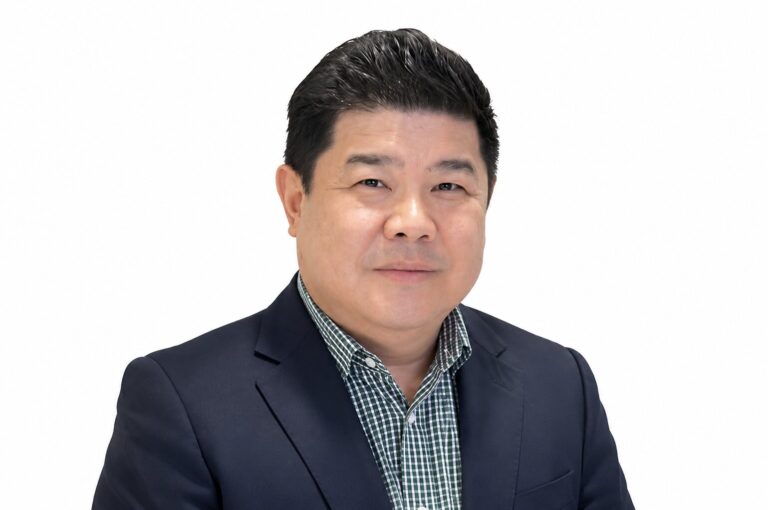
Steven Loke
Steven K.K. Loke (BA, MBA) is a transformative force in global entrepreneurship, whose 30- year career reflects a relentless pursuit of innovation, sustainability, and societal impact. His expansive portfolio spans industries as diverse as travel technology, telecommunications, F&B, retail innovation, property development, advertising and media, artificial intelligence, edge computing, smart security, blockchain, and proprietary NFT and metaverse platforms. With an instinct for emerging technologies and a disciplined approach to R&D investment, he has guided numerous ventures from inception to unicorn status—positioning them at the forefront of the Fourth Industrial Revolution.
At the helm of Forest First International Inc., Steven leads the world’s largest forest conservation initiative, deploying Real-World Asset (RWA) tokenization to transform nature into a digitally securitized asset class. His vision merges ecological preservation with financial innovation, enabling conservation efforts to be sustainably funded through block chain powered transparency. By partnering with village cooperatives, Forest First integrates smart agriculture, renewable energy, telehealth, and remote education—building resilient communities that become stewards of their ecosystems. The project is not only a blueprint for climate finance but a paradigm shift in how nature is valued and protected in the modern economy.
Steven’s leadership style is both visionary and deeply personal. He cultivates high performance, multicultural teams rooted in a culture of excellence, adaptability, and shared purpose. His approach balances strategic foresight with mentorship, inspiring individuals to innovate not only within their roles but across entire industries. This ethos of empowerment also informs his philanthropic commitments, which span education, elderly care, cancer research, and poverty alleviation.
A hallmark of Steven’s educational advocacy is the Innovation & Research Centre he endowed at Hong Kong Shue Yan University in 2020, which houses a Big Data Lab, VR Lab, and Social Robotics & Digital Living Lab. These facilities support cutting-edge degree programmes in immersive media design and computational analytics, with scholarship funding earmarked to democratize access to advanced learning.
Steven’s institutional and diplomatic roles reinforce his global outlook and dedication to inclusive growth. He serves as:
- Governor, Hong Kong Shue Yan University
- Founder, Chinese Cultural Legacy Research Trust
- Chief Representative, Malaysia–China Business Council (Hong Kong & China Liaison Office)
- Signatory, United Nations Global Compact
- Member, UN Economic and Social Commission for Asia and the Pacific (ESCAP)
- President, Alliance Forum Foundation Asia
In these capacities, he is a vocal advocate for Public Interest Capitalism—a model where profit serves purpose, innovation uplifts humanity, and capital flows toward solutions that foster shared prosperity. His mission is to nurture a healthy middle class, unlock long-term growth through sustainable enterprise, and champion inclusive economics that empower every stakeholder.
As the steward of several multinational conglomerates and publicly listed entities, Steven blends entrepreneurial agility with governance excellence. His overarching ambition is not merely to build companies, but to shape industries and catalyse systems-level change—laying the foundation for a smarter, healthier, and more equitable future.
Philosophy: Dream Big · Be Kind · Do Good.
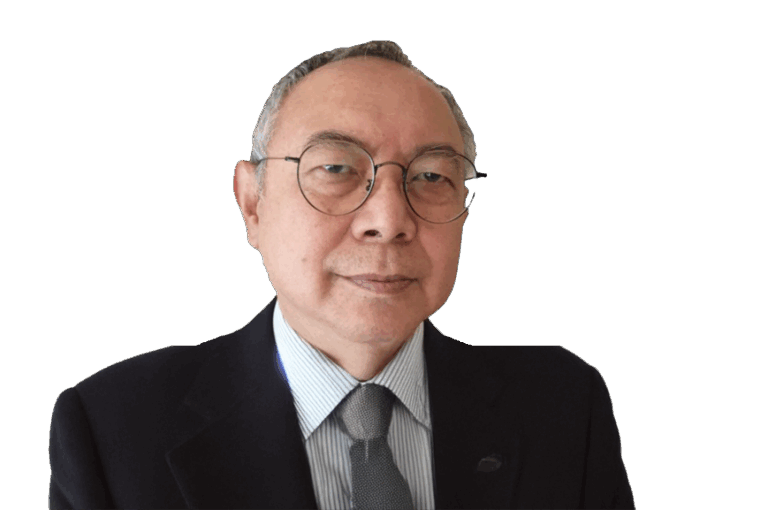
Dr Eddy Limantoro
Dr. Limantoro, founder and CEO of PT Bum Desa Indonesia, holds a Ph.D. in System Science from The City University, London. With a career spanning government IT innovations, early AI research, and co-authoring Indonesia’s Village Law, he has dedicated himself to empowering rural communities through telecommunications, renewable energy, and conservation initiatives.

Michael Salmasi
Michael Salmasi’s career spans more than fifteen years at the intersection of distributed computing, financial markets, and decentralized infrastructure, with a consistent focus on building resilient, universally accessible systems that bring real-world assets and intelligence on-chain.
Salmasi is the founder of Panoptes Exchange, a white-label trading platform for real-world assets (RWAs) built on Synova’s institutional infrastructure. Panoptes is anchored by a decentralized physical infrastructure (DePIN) network of edge devices, ground sensors, and satellite connectivity that continuously verifies the underlying assets — bringing cryptographic provenance to natural capital, energy credits, land, and satellite-linked infrastructure as they enter digital securities markets.
He is also the founder and CEO of Veea Solutions Inc., where he leads the deployment of AI-driven edge infrastructure and intelligent connectivity solutions. Veea’s platform — anchored by VeeaONE and the TerraFabric control plane — enables organizations to operate AI and autonomous workloads safely at the edge across distributed, multi-vendor environments, with applications spanning smart conservation, smart agriculture, telemedicine, and tele-education in underserved regions across Southeast Asia and Latin America. Under his leadership, Veea has also pioneered the convergence of edge AI and blockchain infrastructure, including early development work on the Sui network and a notable demonstration of “internetless” IoT functionality at Sui Basecamp 2024.
Salmasi’s involvement in the cryptocurrency sector dates to 2008, following the original publication of the Bitcoin whitepaper on the Metzdowd cryptography mailing list. He contributed to the earliest decentralized finance concepts — including Vitalik Buterin’s original colored coins proposal — and developed modeling tools used by some of the largest Bitcoin mining operators in China. He has since advised and invested in a broad range of projects across the cryptocurrency and blockchain industry.
Prior to Veea, Salmasi founded MaxCrunch in 2010, building mobile payment processing technology for small and medium-sized businesses, incorporating dynamic pricing algorithms. The technology was subsequently acquired by a major payment processor in South Korea.
His earlier career included a role in wealth management at UBS Financial Services. Over the past decade, Salmasi has been an active angel investor and limited partner in technology companies. He holds an MBA from NYU Stern with specializations in Finance and High-Tech Entrepreneurship.

Cindy Rentala
Cindy Rentala is a senior fintech and payments executive with 20+ years of experience building and scaling products at the intersection of financial services and emerging technology, including fintech, blockchain, and deep tech.
At Visa, she was a founding member of Visa Direct, helping scale the business at triple-digit growth into a multibillion-dollar platform. She led strategy, commercialization, pricing, operations, and global expansion, and played a key role in landmark partnerships with companies such as Square, Facebook, PayPal/Venmo, Zelle, and Google Pay.
Previously, she served as Head of Strategy and Planning for Visa Prepaid, where she helped build the business from an early-stage initiative into a comprehensive product suite over six years. She also led Visa’s Small Business Debit portfolio as a P&L owner, driving 30%+ growth on a billion-dollar base through product innovation and issuer partnerships. Earlier in her career, she held senior marketing roles at Charles Schwab and American Express.
Beyond her operating roles, Cindy is an active advisor and investor in deep tech startups. She serves on the advisory board of NeuroNYC, advancing New York as a global hub for neurotechnology, and Papua Pacific Holdings, a sovereign natural capital platform focused on tokenizing and commercializing large-scale environmental assets.
She is also the founder of Rise First, a nonprofit dedicated to supporting first-generation, low-income students and professionals.
Cindy holds an MBA in Marketing and a BS in Finance and Accounting from the Wharton School at the University of Pennsylvania.
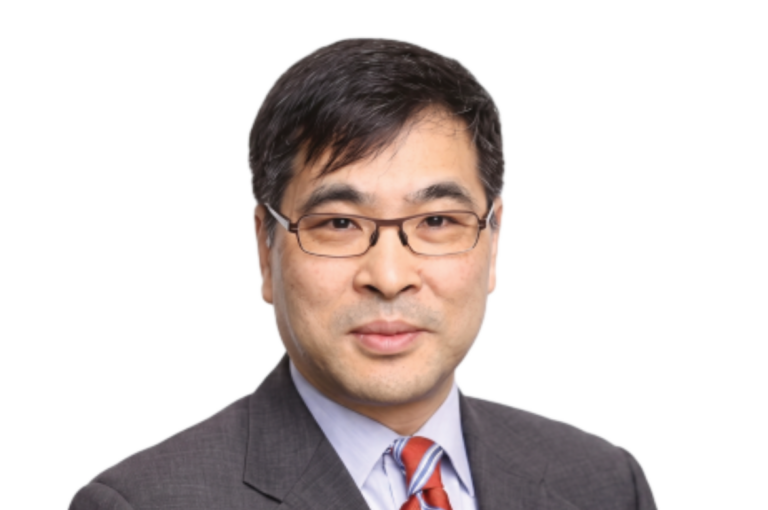
Willie Yam
Willie Yam is a visionary leader and strategic innovator with a two-decade track record of driving digital transformation and growth for both startups and global enterprises. By bridging the gap between cutting-edge technology and business strategy, he consistently delivers solutions that redefine industries and create lasting value.
Most recently, Willie has been instrumental in the startup ecosystem, guiding organizations in Web3.0 crypto spaces, through strategic planning and product-market fit development lifecycle and to secure prestigious government incubation and investment funding.
As the former Director of Digital Solutions Services at Lenovo, he more than 5 years spearheaded the deployment of AI, IoT, and AR/VR technologies, laying the foundation for market-leading digital transformation solution design and implementations.
Willie’s extensive background includes an 18-year tenure at Cisco Systems, where he served as General Manager of Cisco Advanced Services, Asia Pacific. In this role, he led a 250-member team in optimizing network investments and accelerating technology adoption across the financial, manufacturing, and energy sectors. He began his professional journey on Wall Street, spending eight years at elite firms such as J.P. Morgan and PwC.
A certified TOGAF 9 Enterprise Architect (EA) practitioner, Willie holds a BSEE and an MS in Information Management from the NYU School of Engineering. His unique blend of technical acumen and hands-on leadership makes him a premier advisor and innovator in the digital transformation space.
Michael Salmasi
Michael Salmasi’s career spans more than fifteen years at the intersection of distributed computing, financial markets, and decentralized infrastructure, with a consistent focus on building resilient, universally accessible systems that bring real-world assets and intelligence on-chain.
Salmasi is the founder of Panoptes Exchange, a white-label trading platform for real-world assets (RWAs) built on Synova’s institutional infrastructure. Panoptes is anchored by a decentralized physical infrastructure (DePIN) network of edge devices, ground sensors, and satellite connectivity that continuously verifies the underlying assets — bringing cryptographic provenance to natural capital, energy credits, land, and satellite-linked infrastructure as they enter digital securities markets.
He is also the founder and CEO of Veea Solutions Inc., where he leads the deployment of AI-driven edge infrastructure and intelligent connectivity solutions. Veea’s platform — anchored by VeeaONE and the TerraFabric control plane — enables organizations to operate AI and autonomous workloads safely at the edge across distributed, multi-vendor environments, with applications spanning smart conservation, smart agriculture, telemedicine, and tele-education in underserved regions across Southeast Asia and Latin America. Under his leadership, Veea has also pioneered the convergence of edge AI and blockchain infrastructure, including early development work on the Sui network and a notable demonstration of “internetless” IoT functionality at Sui Basecamp 2024.
Salmasi’s involvement in the cryptocurrency sector dates to 2008, following the original publication of the Bitcoin whitepaper on the Metzdowd cryptography mailing list. He contributed to the earliest decentralized finance concepts — including Vitalik Buterin’s original colored coins proposal — and developed modeling tools used by some of the largest Bitcoin mining operators in China. He has since advised and invested in a broad range of projects across the cryptocurrency and blockchain industry.
Prior to Veea, Salmasi founded MaxCrunch in 2010, building mobile payment processing technology for small and medium-sized businesses, incorporating dynamic pricing algorithms. The technology was subsequently acquired by a major payment processor in South Korea.
His earlier career included a role in wealth management at UBS Financial Services. Over the past decade, Salmasi has been an active angel investor and limited partner in technology companies. He holds an MBA from NYU Stern with specializations in Finance and High-Tech Entrepreneurship.
Cindy Rentala
Cindy Rentala is a senior fintech and payments executive with 20+ years of experience building and scaling products at the intersection of financial services and emerging technology, including fintech, blockchain, and deep tech.
At Visa, she was a founding member of Visa Direct, helping scale the business at triple-digit growth into a multibillion-dollar platform. She led strategy, commercialization, pricing, operations, and global expansion, and played a key role in landmark partnerships with companies such as Square, Facebook, PayPal/Venmo, Zelle, and Google Pay.
Previously, she served as Head of Strategy and Planning for Visa Prepaid, where she helped build the business from an early-stage initiative into a comprehensive product suite over six years. She also led Visa’s Small Business Debit portfolio as a P&L owner, driving 30%+ growth on a billion-dollar base through product innovation and issuer partnerships. Earlier in her career, she held senior marketing roles at Charles Schwab and American Express.
Beyond her operating roles, Cindy is an active advisor and investor in deep tech startups. She serves on the advisory board of NeuroNYC, advancing New York as a global hub for neurotechnology, and Papua Pacific Holdings, a sovereign natural capital platform focused on tokenizing and commercializing large-scale environmental assets.
She is also the founder of Rise First, a nonprofit dedicated to supporting first-generation, low-income students and professionals.
Cindy holds an MBA in Marketing and a BS in Finance and Accounting from the Wharton School at the University of Pennsylvania.
Willie Yam
Willie Yam is a visionary leader and strategic innovator with a two-decade track record of driving digital transformation and growth for both startups and global enterprises. By bridging the gap between cutting-edge technology and business strategy, he consistently delivers solutions that redefine industries and create lasting value.
Most recently, Willie has been instrumental in the startup ecosystem, guiding organizations in Web3.0 crypto spaces, through strategic planning and product-market fit development lifecycle and to secure prestigious government incubation and investment funding.
As the former Director of Digital Solutions Services at Lenovo, he more than 5 years spearheaded the deployment of AI, IoT, and AR/VR technologies, laying the foundation for market-leading digital transformation solution design and implementations.
Willie’s extensive background includes an 18-year tenure at Cisco Systems, where he served as General Manager of Cisco Advanced Services, Asia Pacific. In this role, he led a 250-member team in optimizing network investments and accelerating technology adoption across the financial, manufacturing, and energy sectors. He began his professional journey on Wall Street, spending eight years at elite firms such as J.P. Morgan and PwC.
A certified TOGAF 9 Enterprise Architect (EA) practitioner, Willie holds a BSEE and an MS in Information Management from the NYU School of Engineering. His unique blend of technical acumen and hands-on leadership makes him a premier advisor and innovator in the digital transformation space.
Dr. John Jiang
Dr. John Jiang is a Trained AI Scientist (Bell Labs & Cambridge) with deep multi-disciplinary expertise and decades of industry leadership as CTO and CDO across some of the world’s largest corporations, including Pacific Bell, SBC/AT&T, China Mobile, and CP Group. He brings a rare combination of academic rigor, enterprise-scale innovation, and startup agility to his ongoing work in advancing transformative technologies across sectors.
As the inaugural Chief Data Officer of CP Group, he focused on cybersecurity, data privacy, cloud, automation, blockchain, and AI/analytics, setting the strategic foundation for group-wide digital transformation. Subsequently, as Group CTO, he expanded his focus to include Cleantech, AI Digital Robotics Vision, Multispectral/NIR, Biotech & Nano Tech & Material, and a broad range of sustainability initiatives—from carbon reduction and Scope 3 tracking to Smart X (IIOT, Edge, Cloud, Quantum, Brain Computing).
A serial Silicon Valley entrepreneur and cofounder of over four startups and unicorns, he has led innovation at the intersection of molecular and digital health, liquid and breath biopsy for cancer detection, GenAI and LLM-based medical prognosis/diagnosis/prescription, multiomics, food-as-medicine, alternative proteins, space-based agriculture, algae and microbiome research, longevity, and health domains including brain, endocrine, vascular, obesity, retinopathy, and vagus nerve stimulation.
His leadership also spans frontier technologies including EM/Far-UVC/NIR, medical imaging (CT, MRI, ECG, EEG), waste valorization, green funding, CCUS, hydrogen (green/flash), advanced batteries (Lithium, Sodium, metal hydrogen, airflow), 5G-A/6G, satellite and Dynamic RIS, perovskite and quantum dot materials, solar and nuclear energy (fission/fusion), and graphene-based innovations. He has also championed AI bird vision for crop and durian health.
Education
- PhD in Computer Science (AI), University of Cambridge
- Bachelor of Science (1st Class Honours), Manchester University
- PhD in Computer Science, Manchester University
- Supervisor of PhD students in AI and Computer Science, Implerial College London

Alan Lau
Alan Lau has over 40 years of experience in IT sales, management, and investment. A Computer Science graduate from Imperial College, he worked at IBM UK, Digital Equipment Corp, and Hewlett-Packard. While at HP, he was awarded the President Club in 1993 for his achievements.
He later founded and invested in numerous companies, including Informatics China, Stone MTI, Asia Online China, and N22 Technology (listed in Singapore). His current investments, such as J-Push (listed on NASDAQ), ACS Gaming, and ADDA Education, are in the fields of communication, IoT, Artificial Intelligence, Blockchain, RICS-V, and Web3 technology.
He is also a founding member and Vice President of the Shanghai Computer Open System Society (SOSA), a Fellow Member of the British Institute of Analysts and Programmers, a Member of the British Computer Society, and a Mensa International Member.

Brian Wong
With over 30 years of international experience at the intersection of technology, global trade, and natural capital, Brian specializes in transforming complex innovations into measurable business outcomes. His career began in global agricultural commodities trading at Mitsui & Co., where he mastered market dynamics and developed high-stakes strategic partnerships.
Transitioning into the technology sector, Brian has spearheaded initiatives in AI, IoT, and Decentralized Systems, collaborating with global giants like Cisco and Siemens to bridge the gap between emerging tech and commercial viability. Currently, he applies this cross-disciplinary expertise to the Real-World Asset (RWA) and Nature-Based Asset (NBA) movement, developing sophisticated investment models that align sustainable development with cutting-edge financial technology. Brian holds a Master’s degree in Technology Management from the Hong Kong University of Science and Technology (HKUST).
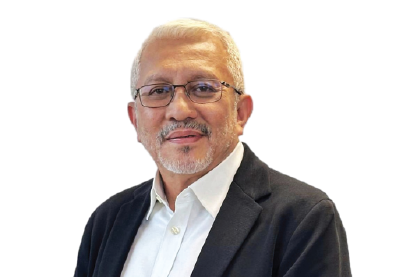
Dato’ Shah Redza Hussein
Dato’ Shah Redza Hussein is an economist turned conservationist. He has been involved in nature conservation and environmental protection for almost 30 years. He left the corporate sector in 1997 to join WWF Malaysia to contribute directly to nature conservation. Other notable positions held was, the Executive Director of the Malaysian Nature Society (MNS), the oldest and largest member-based nature NGO in the country and Special Project Director in Malaysia with Earth And Sea Observation System (EASOS) a UK Space Agency project partner specialized in utilizing satellite and technology in monitoring, protecting and disaster forecasting of our natural environment. Shah Redza was the Director of the Perak State Parks Corporation (PSPC), mandated to head and manage Protected Areas in the State of Perak which includes the protection, conservation and enforcement of the Royal Belum State Park, the conservation islands of the Pulau Sembilan State Park, the lowland wetlands of Kinta Nature Park and to manage the Kinta Valley National Geopark. Leaving PSPC, he was appointed the CEO of Enggang Management Services Sdn. Bhd. a private entity formed to promote and establish new landscape as Protected Areas, site-based biodiversity protection, protected area management and developing programs for community-based conservation with special focus on active actions for the recovery and conservation of the Malayan Tiger. He was responsible in the setting up and operationalizing the Al Sultan Abdullah Royal Tiger Reserve in the greater Taman Negara forest complex, the first tiger reserve in Malaysia.
Shah Redza returned to government service as the CEO of the Malaysia Forest Fund (MFF), a federal government agency tasked to develop and implement instruments and mechanisms to fill the financial gap for forest and biodiversity funding to optimise their protection. Two key instruments being developed and rolled out are the Forest Conservation Certification (FCC) and the Forest Carbon Offset (FCO), the national carbon crediting system for Malaysia.
He currently the CEO of Kayan International Inc., a global nature-based solution organization focused into incorporating advance technology and innovative financing instruments to nature projects on the ground, with an emphasis for community lead projects in sensitive ecological landscape. Kayan International primary projects are based in the Southeast Asia and Oceania region, both for terrestrial forest and marine ecosystem.
He is involved in various NGO and SCO work especially in areas of conservation & environmental protection, indigenous community development, sustainability & social equity and youth empowerment. Shah Redza was awarded the 2020 Global Winner of the Dr Rimington Award for Tiger Conservation by the WWF Tiger Alive programme based in the United Kingdom. He has been appointed to the International Executive Committee of Conservation Assured Tiger Standards (CA|TS), a global accreditation organisation for tiger protection and conservation. A member of the IUCN-World Commission on Protected Areas, he is a current Fellow of the Faculty of Science, University Putra Malaysia and sits on board of the Perak State Parks Corporation.
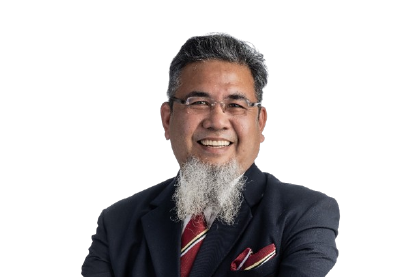
Azmi Faez
Azmi, Chief General Counsel at iFREE GROUP, oversees the conglomerate’s legal and tech-driven operations from its Hong Kong headquarters. Known for his legal and technological expertise, he advises Malaysian Government-Linked Companies and co-founded Tetralogy Alliance and Ascendsys, key players in plasma medicine and cyber security. Azmi also leads MyTPP Sdn Bhd, an innovative insurance firm, and is deeply committed to environmental sustainability, actively consulting on renewable energy and forest conservation projects globally.
Azmi Faez
Azmi, Chief General Counsel at iFREE GROUP, oversees the conglomerate’s legal and tech-driven operations from its Hong Kong headquarters. Known for his legal and technological expertise, he advises Malaysian Government-Linked Companies and co-founded Tetralogy Alliance and Ascendsys, key players in plasma medicine and cyber security. Azmi also leads MyTPP Sdn Bhd, an innovative insurance firm, and is deeply committed to environmental sustainability, actively consulting on renewable energy and forest conservation projects globally.
Dato’ Shah Redza Hussein
Dato’ Shah Redza Hussein is an economist turned conservationist. He has been involved in nature conservation and environmental protection for almost 30 years. He left the corporate sector in 1997 to join WWF Malaysia to contribute directly to nature conservation. Other notable positions held was, the Executive Director of the Malaysian Nature Society (MNS), the oldest and largest member-based nature NGO in the country and Special Project Director in Malaysia with Earth And Sea Observation System (EASOS) a UK Space Agency project partner specialized in utilizing satellite and technology in monitoring, protecting and disaster forecasting of our natural environment. Shah Redza was the Director of the Perak State Parks Corporation (PSPC), mandated to head and manage Protected Areas in the State of Perak which includes the protection, conservation and enforcement of the Royal Belum State Park, the conservation islands of the Pulau Sembilan State Park, the lowland wetlands of Kinta Nature Park and to manage the Kinta Valley National Geopark. Leaving PSPC, he was appointed the CEO of Enggang Management Services Sdn. Bhd. a private entity formed to promote and establish new landscape as Protected Areas, site-based biodiversity protection, protected area management and developing programs for community-based conservation with special focus on active actions for the recovery and conservation of the Malayan Tiger. He was responsible in the setting up and operationalizing the Al Sultan Abdullah Royal Tiger Reserve in the greater Taman Negara forest complex, the first tiger reserve in Malaysia.
Shah Redza returned to government service as the CEO of the Malaysia Forest Fund (MFF), a federal government agency tasked to develop and implement instruments and mechanisms to fill the financial gap for forest and biodiversity funding to optimise their protection. Two key instruments being developed and rolled out are the Forest Conservation Certification (FCC) and the Forest Carbon Offset (FCO), the national carbon crediting system for Malaysia.
He currently the CEO of Kayan International Inc., a global nature-based solution organization focused into incorporating advance technology and innovative financing instruments to nature projects on the ground, with an emphasis for community lead projects in sensitive ecological landscape. Kayan International primary projects are based in the Southeast Asia and Oceania region, both for terrestrial forest and marine ecosystem.
He is involved in various NGO and SCO work especially in areas of conservation & environmental protection, indigenous community development, sustainability & social equity and youth empowerment. Shah Redza was awarded the 2020 Global Winner of the Dr Rimington Award for Tiger Conservation by the WWF Tiger Alive programme based in the United Kingdom. He has been appointed to the International Executive Committee of Conservation Assured Tiger Standards (CA|TS), a global accreditation organisation for tiger protection and conservation. A member of the IUCN-World Commission on Protected Areas, he is a current Fellow of the Faculty of Science, University Putra Malaysia and sits on board of the Perak State Parks Corporation.
Get In Touch
Start Unlocking Sustainable Value Today.
Contact us for any enquiries and we’re here to help.
Contact Details
- enquiry@kayanforest.com
- +60 87 416 111
- enquiry@kayanforest.com
-
Unit Level 9F (2), Main Office Tower,
Financial Park Labuan, Jalan Merdeka,
87000 FT Labuan Malaysia.


Media & Downloads
Video Gallery
The Kayan Project: A Blueprint for Sustainable Finance and Ecological Innovation
卡扬项目:可持续金融与生态创新蓝图
Materials Download
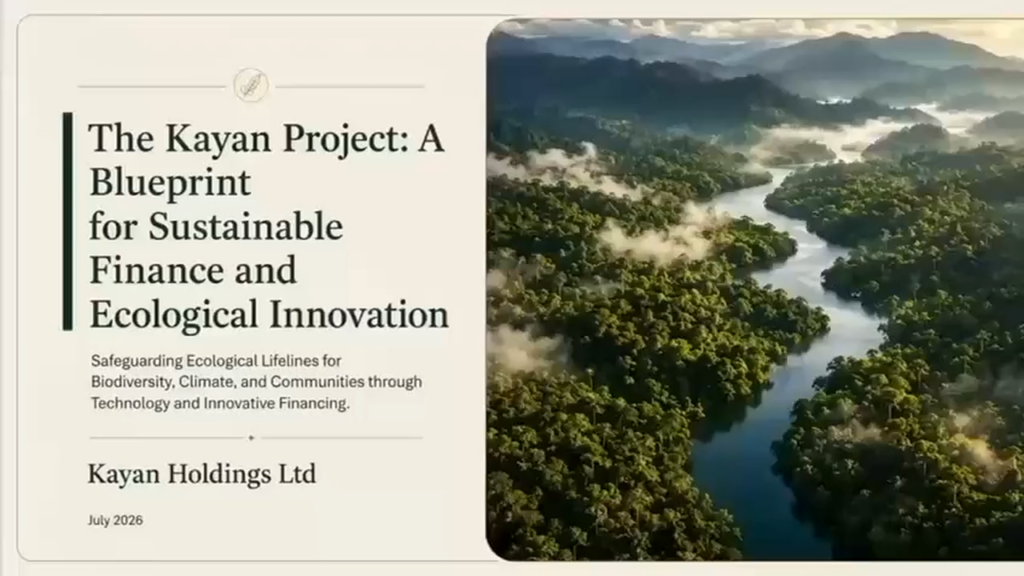
1. The Kayan Project: A Blueprint for Sustainable Finance and Ecological Innovation
Enquire with us to receive the downloadable material at enquiry@kayanforest.com
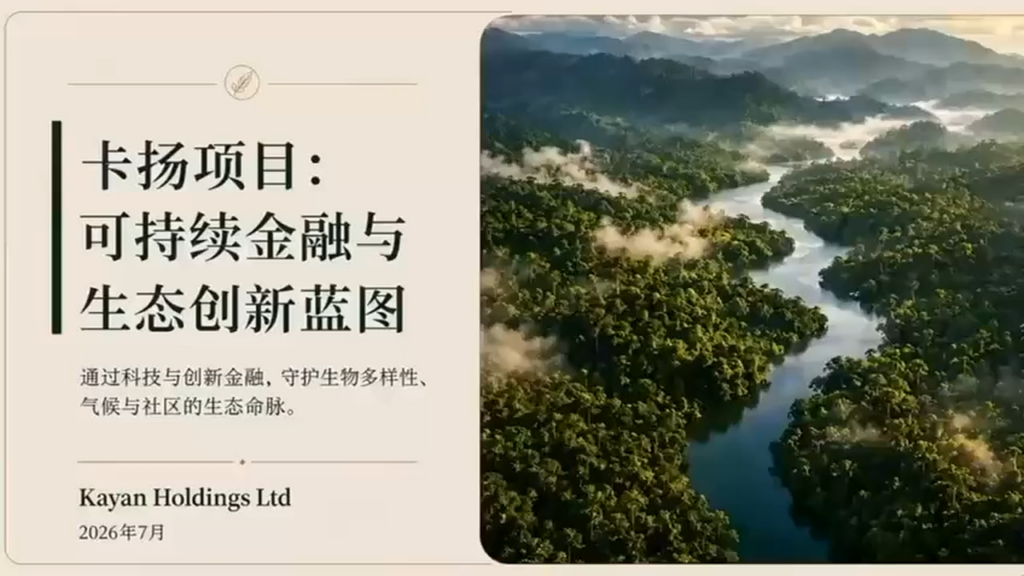
2. 卡扬项目:可持续金融与生态创新蓝图
Enquire with us to receive the downloadable material at enquiry@kayanforest.com
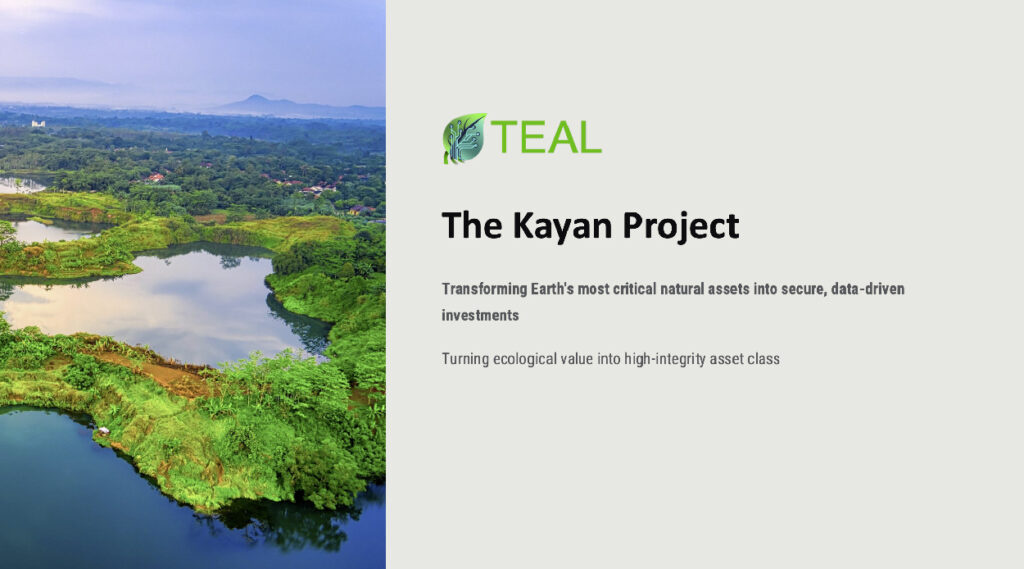
3. Transforming Earth's Most Critical Natural Assets into Secure, Data-driven Investments
An introduction to the Kayan Project — a large-scale conservation and sustainable development initiative in North Kalimantan, Indonesia. This presentation outlines the region’s ecological value, community partnerships, and the foundational role it plays in the Kayan Token strategy.
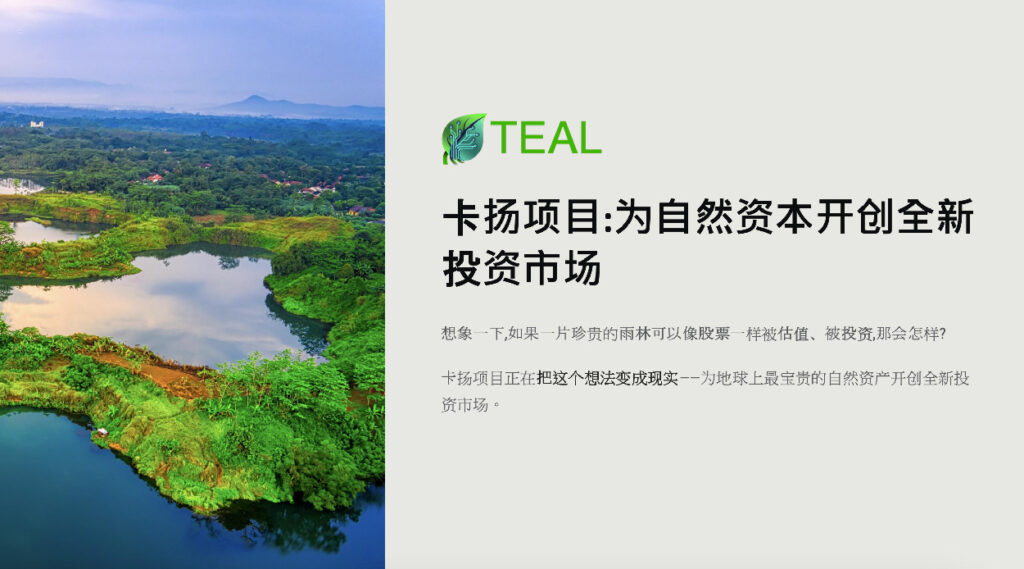
4. 卡扬项目:为自然资本开创全新投资市场
An introduction to the Kayan Project — a large-scale conservation and sustainable development initiative in North Kalimantan, Indonesia. This presentation outlines the region’s ecological value, community partnerships, and the foundational role it plays in the Kayan Token strategy.